


In today’s hyperconnected digital landscape, every laptop, smartphone, server, and tablet represents not just a productivity tool, but also a potential entry point for cyber threats. As businesses embrace digital transformation, the security of these endpoints becomes mission-critical.
At Technomation Technology, we specialize in delivering reliable, scalable endpoint protection solutions tailored to the unique needs of both small and medium-sized businesses (SMBs) and enterprises around the world . Whether you’re a startup looking to secure remote teams or an enterprise managing thousands of devices, we’ve got you covered.
This comprehensive guide explores what endpoint protection is, why it matters, and how organizations can build an effective strategy around it.
What is Endpoint Protection?
Endpoint protection refers to the cybersecurity approach focused on securing end-user devices—commonly known as endpoints—from cyber threats. These endpoints include:
- Desktops and laptops
- Smartphones and tablets
- Servers
- Internet of Things (IoT) devices
- Point-of-sale (POS) systems
Endpoint protection solutions safeguard these devices from threats like malware, ransomware, phishing attacks, data leaks, and unauthorized access.
Why Endpoint Protection is More Crucial Than Ever
1. Rising Sophistication of Cyber Threats
Cybercriminals are constantly evolving. Modern attacks use advanced evasion techniques, fileless malware, zero-day exploits, and AI-driven tactics that traditional antivirus solutions can’t detect. Endpoints are the weakest links and the easiest to exploit.
2. Remote and Hybrid Workforces
With remote work becoming the norm, employees now access sensitive corporate data from personal or unmanaged devices over unsecured networks. This shift exponentially increases the attack surface.
3. Proliferation of Devices
The number of connected devices per employee continues to grow. Each device represents a potential vulnerability if not properly secured and managed.
4. Compliance and Regulatory Pressures
Regulations such as GDPR, HIPAA, PCI-DSS, and others demand stringent data protection measures. Endpoint security plays a key role in ensuring compliance and avoiding hefty penalties.
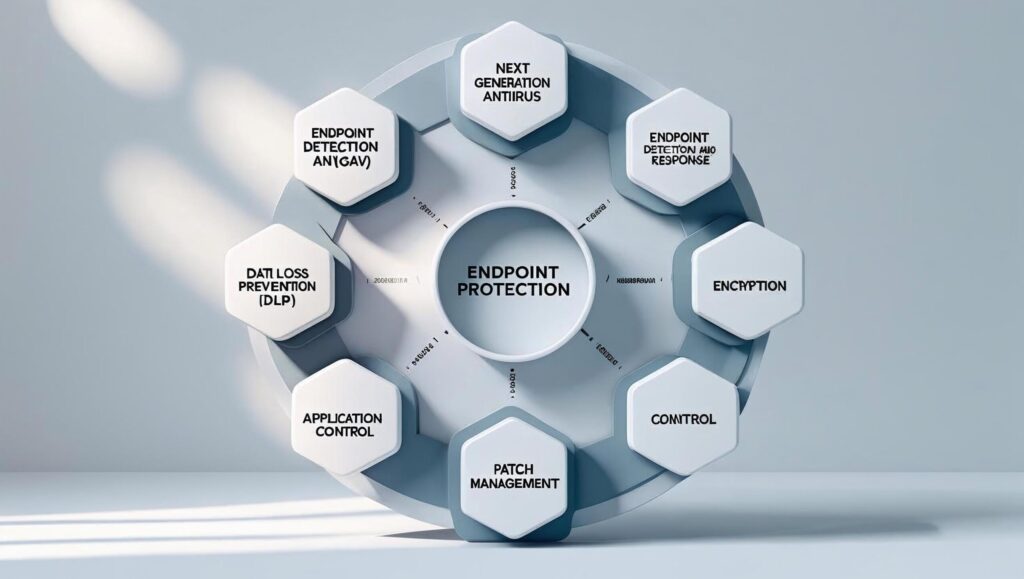
Components of an Effective Endpoint Protection Strategy
1. Next-Generation Antivirus (NGAV)
Unlike traditional antivirus tools that rely on signature-based detection, NGAV uses behavioral analysis, machine learning, and heuristics to detect and block both known and unknown threats in real time.
2. Endpoint Detection and Response (EDR)
EDR tools provide continuous monitoring, data collection, and analysis. They help security teams detect suspicious behavior, investigate incidents, and respond quickly to breaches.
Key features include:
- Real-time visibility into endpoint activities
- Threat hunting capabilities
- Root cause analysis
- Automated or guided response actions
3. Data Loss Prevention (DLP)
DLP technologies monitor and control data transfer across endpoints to prevent sensitive information from being leaked, shared, or stolen—either accidentally or maliciously.
4. Application and Device Control
This involves policies that restrict unauthorized devices and applications from running on endpoints. Only pre-approved tools should be allowed, reducing the risk of shadow IT and malware infiltration.
5. Encryption
Encryption ensures that even if a device is compromised or stolen, the data remains inaccessible without the proper decryption keys.
6. Patch and Vulnerability Management
Unpatched software can be exploited by cybercriminals. Regular and automated patching of operating systems and applications is essential to minimize vulnerabilities.
7. Firewall and Network Controls
Built-in firewalls and network access control policies can prevent malicious traffic from reaching the endpoint or spreading laterally within the network.
8. Cloud-based Endpoint Protection Platforms (EPP)
Modern endpoint security platforms offer centralized management through the cloud, enabling real-time updates, simplified deployment, and consistent security policies across all devices.
Common Endpoint Threats and How They Work
1. Ransomware
Ransomware encrypts user files and demands a payment to restore access. It often enters through phishing emails or malicious downloads. Advanced endpoint protection can block suspicious processes and isolate the affected device.
2. Phishing and Social Engineering
Even the most secure system can be compromised by human error. Endpoint protection platforms often integrate with email filters and browser controls to prevent access to malicious links and attachments.
3. Zero-day Exploits
Zero-day vulnerabilities are flaws unknown to vendors. Attackers exploit them before patches are available. Heuristic and behavior-based endpoint defenses are essential for identifying such threats.
4. Insider Threats
Employees can accidentally or maliciously cause data breaches. Endpoint monitoring and behavior analytics can flag unusual data access or transfer attempts.

Building an Endpoint Protection Plan for Your Business
At Technomation Technology, we follow a structured approach to endpoint security that ensures both operational security and regulatory compliance for SMBs and enterprises alike.
Our CTO is cybersecurity certified and hands-on experience designing and deploying cost-effective, enterprise-grade endpoint security solutions.
Step 1: Assessment
- Inventory all devices and software
- Evaluate current security posture
- Identify risks and vulnerabilities
Step 2: Policy Development
- Define usage rules for corporate and BYOD devices
- Set access levels and data protection protocols
- Establish incident response procedures
Step 3: Solution Deployment
We implement modern EPP and EDR solutions that fit your specific needs—whether you’re an SME or an enterprise. Our tools offer:
- Centralized management
- Real-time monitoring
- Threat intelligence integration
Step 4: Employee Training
Employees are the first line of defense. Regular training programs educate users on:
- Recognizing phishing emails
- Secure data handling
- Reporting suspicious activity
Step 5: Ongoing Monitoring and Maintenance
- Continuous threat detection and response
- Regular audits and compliance checks
- Updates and patches managed proactively
Managed Endpoint Protection: Why Outsourcing Makes Sense
Keeping up with security threats can overwhelm internal IT teams—especially for growing SMBs. That’s why Technomation Technology offers fully managed endpoint protection services:
✅ Tailored to Your Business Size – Whether you have 10 or 10,000 endpoints
✅ End-to-End Deployment – We handle everything from assessment to rollout
✅ Ongoing Monitoring – 24/7 threat detection and response
✅ Compliance Support – Meet regulatory requirements with confidence
Let us take the burden off your team. Focus on your business—while we focus on securing your endpoints.
Final Thoughts: Securing the Future & Partner with Technomation
Endpoint protection is the bedrock of a strong cybersecurity posture. As threats continue to evolve and attack surfaces expand, businesses must prioritize proactive, intelligent, and adaptable endpoint security measures.
Securing endpoints is not a one-time event—it’s an ongoing commitment. Whether you’re an SMB needing quick, budget-conscious deployment or a large business requiring a customized multi-site endpoint strategy, Technomation Technology is your trusted cybersecurity partner. At Technomation Technology, we empower organizations around the word special in Dubai to protect their digital assets with cutting-edge tools, expert insights, and continuous support.
✅ We design, deploy, and manage endpoint protection tailored to your size and complexity
✅ We support cloud-based, hybrid, and on-premise environments
✅ We offer fast deployment timelines and flexible support options
✅ We keep your team secure, your data protected, and your business compliant
Ready to Secure Every Device in Your Business?
Contact Us Now
Or schedule a demo with our security experts.